So how much is the actual tariff?
Summary: itolduandso is seeking clarification on how to calculate tariffs for importing goods, using an example of shoes with a base duty rate of 37.5% and a Section 301 tariff of 25%. reallynicestamps explains that the buyer pays these tariffs and clarifies the role of trade agreements in determining rates. recped provides insights into different tariffs based on trade agreements and points out potential changes in US Customs’ decisions. Throughout the discussion, participants underscore the complexity and variability of tariffs, with several recommending consulting primary sources over AI models like GPT for accurate tariff calculations. Additional factors like product category, shipping costs, and customs policies are noted as influencers on import fees.
Can somebody explain this example here for the Shoe ... (https://www.tariffinder.ca/en/getStarted)
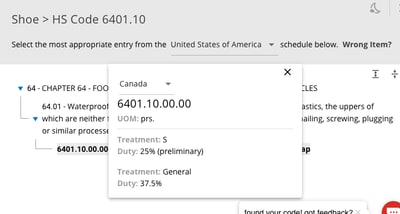
I checked with GPT but I am not sure if it's garbage or correct response:
- A base duty rate of 37.5%
- A Section 301 tariff of 25%
Effective Total Tariff:
If tariffs are applied sequentially, the effective rate could be (1.375 × 1.25 = 71.87%) of the product's customs value.
Is this correct?

mrdutch1001
Canada had a $20 limit on imports for decades and now y'all in a tizzy over the USA possibly having a $0 limit?!
Life goes on...
C'est la vie!
Que sera,sera!
Have a good day everyone!
reallynicestamps
Most trade agreements are made to protect manufacturers rather than retailers.
On that basis, the place the item was manufactured would be main factor in deciding whether or not it is dutiable and at what rate.
But.
The day to day decisions are in the hands of border officers,who have a lot of experience, and thick binders of rulings.
But they are still human beings.
Error and opinion may slip in there from time to time.
However.
US duty , taxes and tariffs are paid by the importer in the USA, not by the exporter in Canada (or China or Italy).
I checked with GPT but I am not sure if it's garbage or correct response:
Don't trust it.
Go to the primary sources.
And remember those tariffs are executive orders, not necessarily the law, and are being challenged.
Plus the dates and amounts keep changing.
But it's your buyer's problem not yours.
Canada and the EU do have a trade agreement, CETA
https://www.international.gc.ca/trade-commerce/trade-agreements-accords-commerciaux/agr-acc/ceta-aecg/index.aspx?lang=eng
You would pay the appropriate duty and sales taxes when you import the purse from Italy.
Your buyer would pay the appropriate duty, sales tax, and tariff when they import the Italian-made purse from Canada.
More than a decade ago , eBay gave sellers some boilerplate about import fees, which I put in every description I list.
Import duties, taxes and charges are not included in the item price or shipping charges. These charges are the buyer's responsibility. Please check with your country's customs office to determine what these additional costs will be prior to bidding/buying
lotzofuniquegoodies
For anyone interested here is a most current I could locate for de minimus thresholds by country. Dated 2025
https://global-express.org/index.php?id=271&act=101&profile_id=-1&countries%5B%5D=-2&search_terms=&question-filter=&qid_34=1&qid_34_optid=1&qid_35=1&qid_36=1&qid_92=1
recped
The "General"treatment would be for goods manufactured in a country that DOES NOT have an established trade agreement. The Section 301 is specifically for goods manufactured in China.
The "preliminary" would be for potential duties that may or may not come into effect on Tuesday, that would apply to goods manufactured in Canada (currently duty free under the USMCA Treaty).
In theory at least "you" pay either one rate or the other but not both.
That said, there is absolutely no clarity on how US Customs will handle things going forward (from March 4th).
itolduandso
OPSo for example, EU doesn't have any treaty with US at all.
Its clear as mud.
If I sell a hand bag, made in Italy, shipping from Canada, that means the tariff will be 37.5%?
If EU was charged 25% and I am shipping it from Canada, will the tariff be 25% or 50%?
If the bag was made in Canada, it will be 25%.
If the bag was made in China, the tariff is 37.5% as well?
If the tariffs on anything coming from China were lifted to 50% and I was shipping the bag from Canada, assume the tariff would be 50%?
reallynicestamps
If you are the seller it is irrelevant.
The BUYER pays all duties and tariffs charged by their own government.
If you are the buyer, you would pay the 71.87% of the value.
Does the value included the shipping cost though?
Canada does not, at the moment, have any retaliatory tariffs on US manufactures.
And the government has said that any tariffs would be targetted- mostly to goods manufactured in "red" states to cause the most discomfort to their government's supporters.
lotzofuniquegoodies
@reallynicestamps
From past work experience when using couriers tax was based on applicable shipping charges. Couriers would have that info when the item is passed on to customs for inspection. As far as I know, from my research this never happened with the postal services. Attached is from a search on the subject. Customs clearing channels would include couriers and freight forwarders. Brokerage via USPS has been 6.50 +- USD for years. If that will get "revised ----increased" is anyones guess.